Health
The Psychology of Winning
In sports and in life, those who control anxiety dominate the game.
About a decade ago, in the men’s individual épée final at the Rio Olympics, South Korea’s Park Sang-young was pushed to the brink, trailing Hungary’s veteran fencer Géza Imre by four points. Before entering the final third period, he quietly repeated to himself, “I can do it, I can do it, I can do it.” After taking a breath and lifting his sword again, he made a miraculous comeback to win 15–14 and claim the Olympic gold medal he had dreamed of. Park’s dramatic victory proved that in sport, the real turning point lies not in skill or stamina, but in mental strength.
In the face of unexpected variables and intense pressure, the person who keeps moving forward without wavering is the one who ultimately wins. In that sense, sports closely resemble life. The key question is how we manage anxiety. So how can we turn anxiety into a positive driving force?
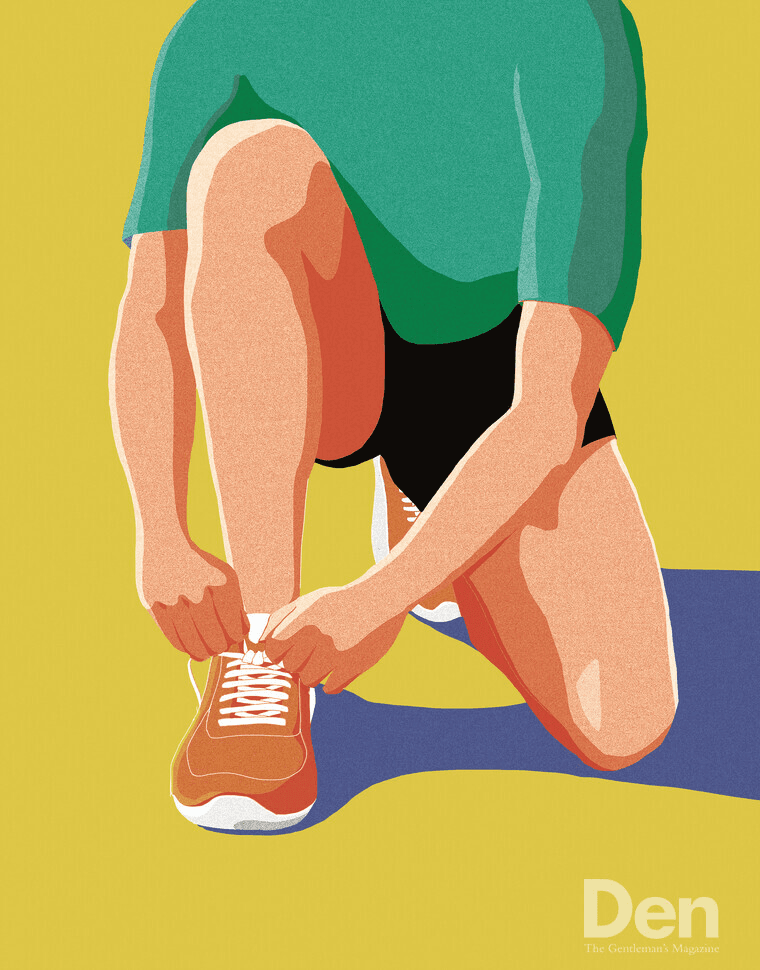
The Science of Success: Turning Anxiety into Momentum
Just as weight training strengthens muscles, the mind can also be strengthened through training. Unlike general psychology, which often focuses on easing depression and other difficulties, sports psychology concentrates on mental training that elevates an average mental state to an optimal one. In other words, while general psychology often aims to move a person from negative to neutral, sports psychology seeks to help them leap from neutral to positive. For this reason, sports psychology is sometimes called the science of success.
Among the many emotions it addresses, sports psychology pays particular attention to anxiety. Anxiety has two sides: when managed well, it can sharpen focus and become a powerful source of drive, but when left unmanaged, it can lead to the “yips,” a condition where even familiar movements become difficult to perform. Many athletes have experienced the yips, including Tiger Woods, Park In-bee, and tennis player Ana Ivanovic. Park In-bee, who fell into a slump after the 2008 U.S. Open due to the yips, once admitted, “The psychological pressure made it painful just to step onto the course.”
In sports psychology, anxiety is fundamentally viewed as positive energy. Lee Sang-woo, head of the sports psychology education institute Mental Performance, interprets anxiety as an emotion that comes from the desire to do well. Because anxiety is not an unwelcome intruder but a state of excited anticipation, an appropriate level of tension and anxiety can actually support strong performance. That is why he advises athletes before competition to “welcome anxiety warmly when it arrives.”
This perspective applies just as well outside the playing field. Modern life repeatedly places people in situations that demand intense concentration and sound judgment, such as presentations and work meetings, making it much like a competitive athletic environment. Lee also notes that when sports psychology is applied to everyday life, it can help people avoid being overwhelmed by anxiety and perform more effectively in their work.
Focus on What You Can Control
Where should we begin if we want to handle anxiety well? Lee says that the first step is distinguishing what is controllable from what is not. If you keep dwelling on uncontrollable future outcomes such as “Don’t make mistakes” or “Don’t fail,” you become psychologically intimidated and lose focus on the task right in front of you. To prevent this, it is important to focus only on what you can control. For example, before an important meeting, it is more effective to review your strategy and clarify your role than to fixate on the thought, “I must not mess up.”
The next important step is to focus on process cues. In general, when anxiety rises, thoughts multiply and attention becomes scattered. At that point, concentrating on a single process cue can calm the mind and improve performance. A process cue is an essential point of attention tied to a specific action. Because it comes from the methods that produced good results in the past, or the sensations associated with successful outcomes, each person’s process cue is different even when they perform the same movement. For example, for one batter it may be “Keep your eyes on the ball until the end,” while for another it may be “Keep the rotation axis stable.” Both are process cues that help improve contact and performance. When you establish your own specific process cues and focus on them, you can minimize psychological wavering and control anxiety effectively. The same principle applies when preparing for presentations and business meetings. By recalling a successful presentation and setting process cues such as “Focus on the opening sentence,” “Move your gaze slowly,” or “Speak one beat slower than usual,” you can maintain concentration and turn anxiety into self-confidence.
Give Yourself a Command
To perform at their best, athletes must regulate their level of arousal. When the right state is maintained, they enter a state of flow, where performance is maximized. If psychological energy is too low, a person becomes lethargic and loses focus. If it is too high, excessive tension and anxiety make it difficult to perform at their usual level. That is why training to interpret anxiety as positive energy and regulate one’s mental state is essential.
Lee Sang-woo emphasizes visualization and self-talk as key strategies for reaching a state of flow. Weightlifter Jang Mi-ran and footballer Park Ji-sung also used these techniques in real competition. During training, Jang Mi-ran would close her eyes and vividly imagine the course of the event and the exact result she wanted. Park Ji-sung, each time he entered the field, would repeat to himself, “I am the best player in this stadium,” transforming anxiety into positive energy.
Visualization practiced during training is a powerful tool. When you mentally rehearse a target situation and experience the feeling of success in advance, you can stay calm and focused in real situations. To be effective, however, the image should be as vivid as possible, engaging all senses—sight, sound, and touch. Before a meeting or presentation, it helps to imagine the space, the audience’s expressions and reactions, your tone of voice, the way you speak, the atmosphere in the room, and even the view outside the window. After the simulation, take time to organize key points—when to breathe deeply, when to make eye contact, and how to control your pace and tone—so you can respond more confidently in the real situation.
At the execution stage, self-talk is another effective method for regulating anxiety. By repeatedly reinforcing specific thoughts, you can influence your subconscious, shift into a positive mindset, and maximize your potential. When anxiety rises before an important decision, repeating phrases such as “You can do this,” “Be confident,” or “Be courageous” can help. If you start speaking too quickly during a presentation, simple cues like “Slower” or “Stay calm” can help you regain control.
Anxiety is not something to avoid, but a psychological resource to use. Rather than seeing anxiety in critical moments as negative, it should be accepted as a trigger for peak performance. By focusing on controllable factors and process cues, and consistently practicing visualization and self-talk, anxiety can become the most powerful fuel for success.
SUMMARY. Inner Training Methods Recommended by a Sports Psychology Expert
Distinguish between what you can control and what you cannot
Recall successful experiences and focus on your own process cues
Simulate your work environment and process in detail, and note key points for execution
When anxiety rises, repeat positive phrases such as “I can do it” and “Stay calm”
advice Lee Sang-woo (Ph.D. in Sports Psychology, Head of Mental Performance)
illustrator Jang In-beom
© Den Magazine. Unauthorized reproduction and redistribution prohibited.
Anxiety Management
Counseling
Sports Psychology
Anxiety
Mental Health